
 English
 Arabic
 Croatian
 Dutch
Dutch French
 German
 Italian
 Portuguese
 Russian
 Spanish
 Ukrainian

Ramaya Vallias: Art, memory and purpose met in Cascais
Humanitarian Civil Diplomat and abstract realism artist Ramaya Vallias moved guests at the Cidadela de Cascais with “Presence that Echoes – MLK”, a live painting tribute to Dr Martin Luther King Jr during Jethro International’s Solemn Act.
On 28 April 2026, during the Solemn Act of Civil Diplomat Jethro International at the Cidadela de Cascais, Humanitarian Civil Diplomat and visual artist Ramaya Vallias offered one of the most moving moments of the ceremony.
Before an audience of distinguished guests, authorities, civil diplomats and invited personalities, the Brazilian painter created a live artwork in honour of Dr Martin Luther King Jr, transforming the ceremony into a profound encounter between art, memory and Humanitarian Civil Diplomacy.
The performance paid tribute to the legacy of Dr King and to the values represented by the Martin Luther King Prize of Jethro International: dignity, justice, courage, peace and service to humanity.
Ramaya Vallias and the Martin Luther King tribute in Cascais
Ramaya Vallias, a visual artist known for his abstract realism and large-scale portraits, brought to the Cidadela de Cascais more than a painting. He brought a gesture of reverence.
The work created during the ceremony received the title “Presença que Ecoa – MLK”, or “Presence that Echoes – MLK”. It belongs to the artist’s series “Masters and Influences”, a body of work in which portraiture enters into dialogue with memory, art history and the figures who have shaped human consciousness.
Created in acrylic on canvas, the artwork now forms part of the private collection of the Civil Diplomat Human and Humanitarian Committee, giving the performance a lasting institutional and symbolic meaning.
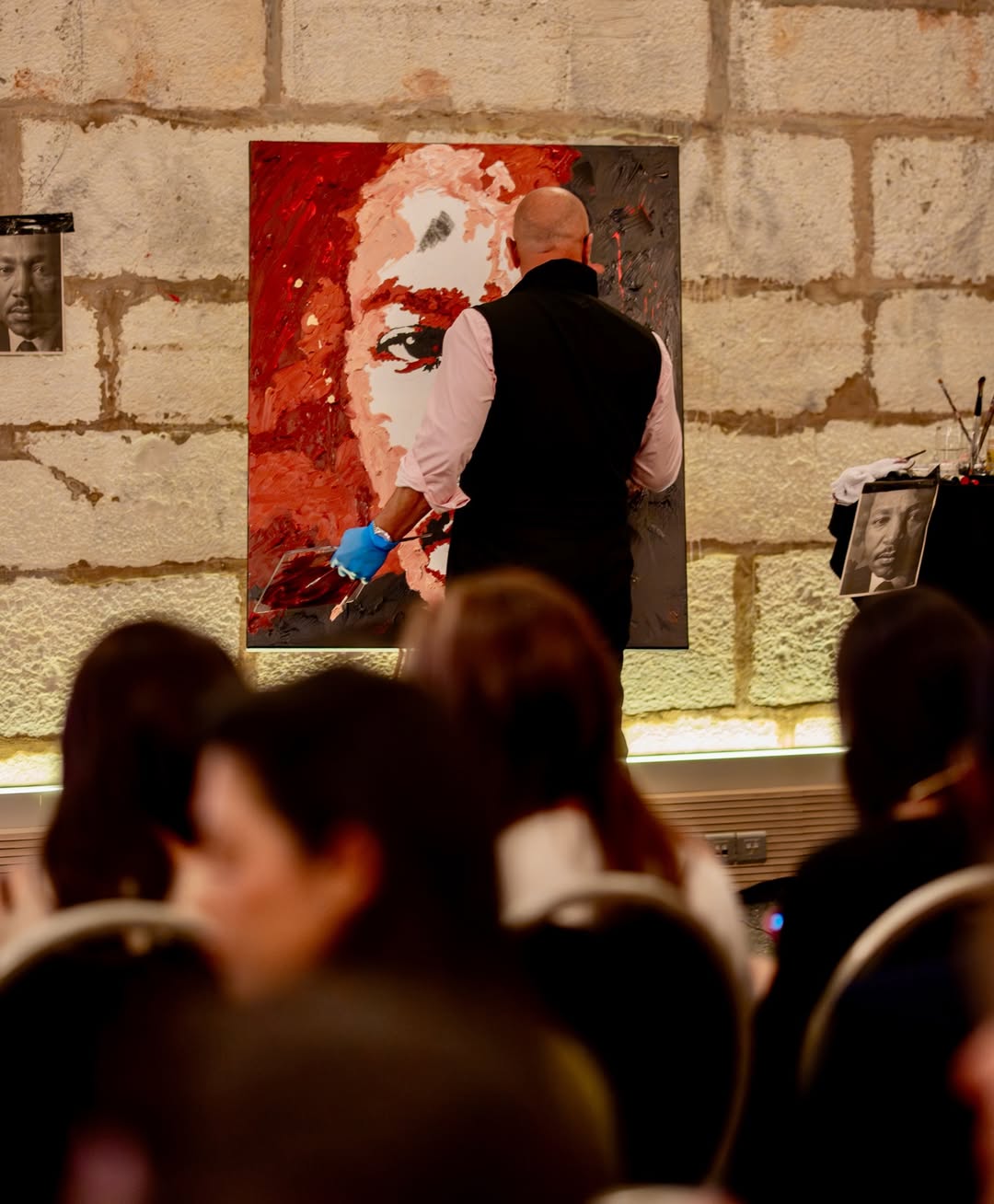
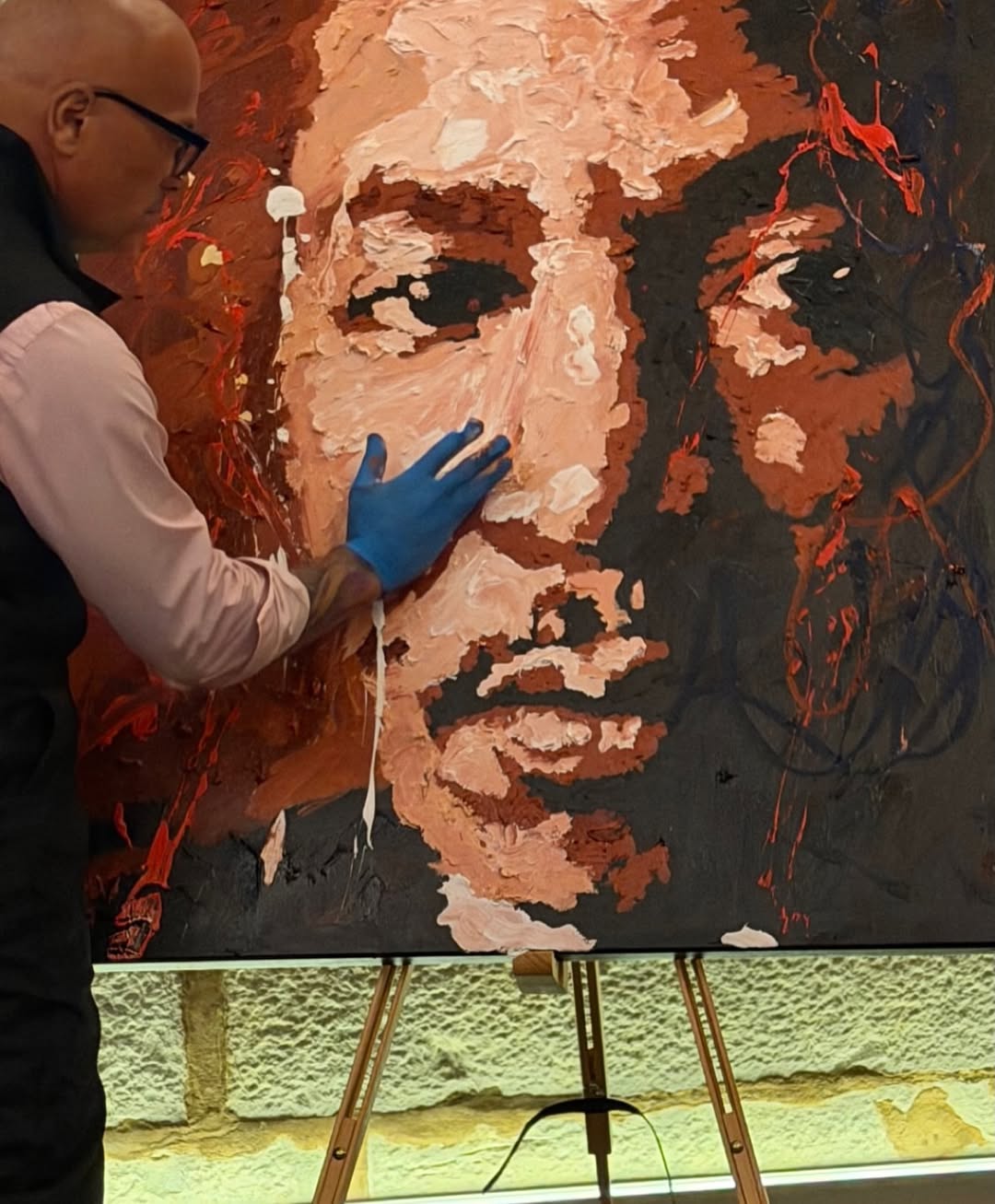
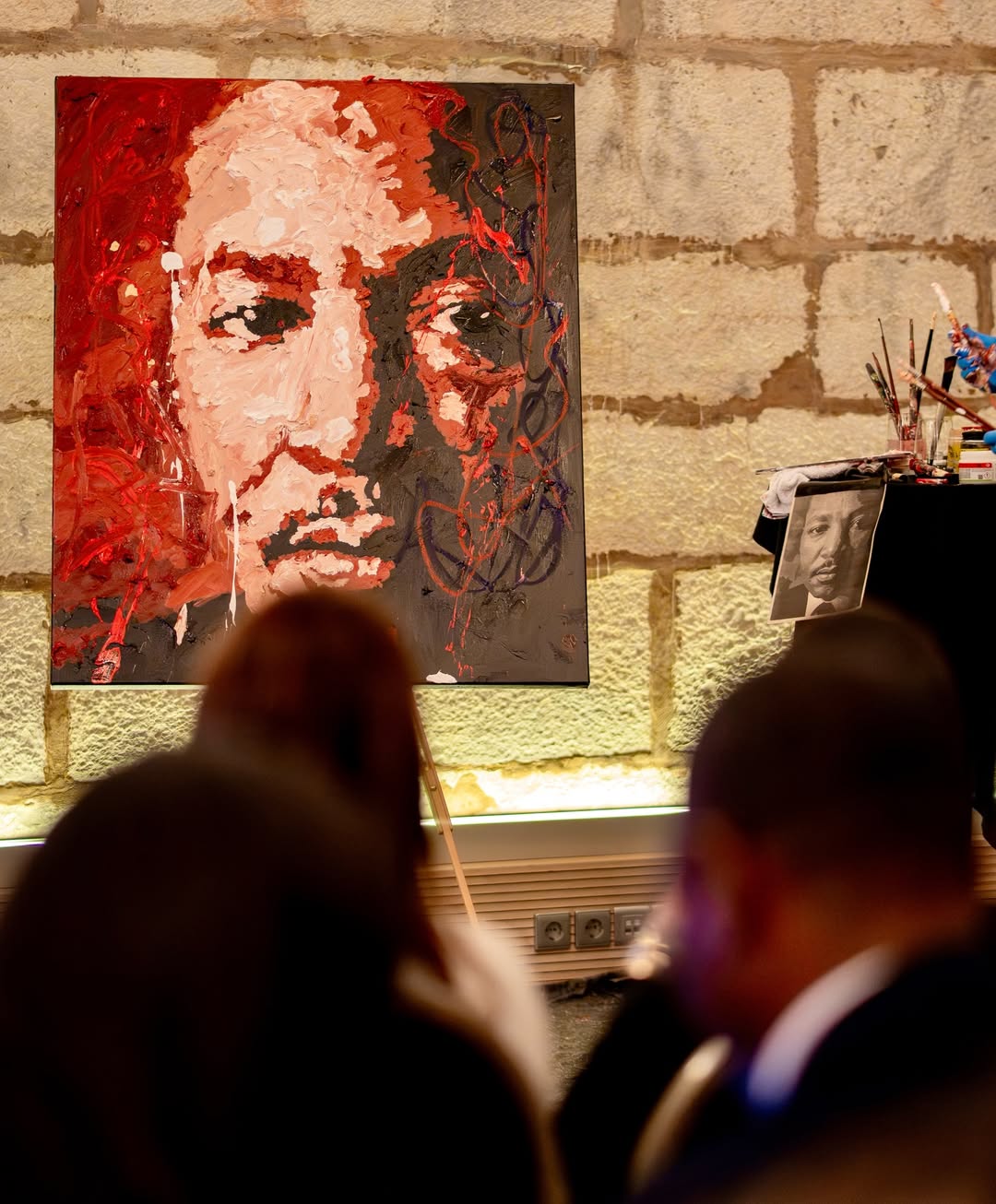
As the ceremony unfolded, the artist painted the face of Dr Martin Luther King Jr with intensity, sensitivity and presence. Each brushstroke seemed to gather the silence of admiration, the strength of history and the emotional weight of a legacy that continues to inspire the world.
The guests followed the artistic process with visible emotion. What began as a blank canvas gradually became a living tribute to one of the greatest symbols of civil rights, human dignity and moral courage in contemporary history.
For many present, the artwork became a visual prayer. For Jethro International, it became a symbolic affirmation of the spirit that guides Humanitarian Civil Diplomacy.
The painting “Presence that Echoes – MLK”
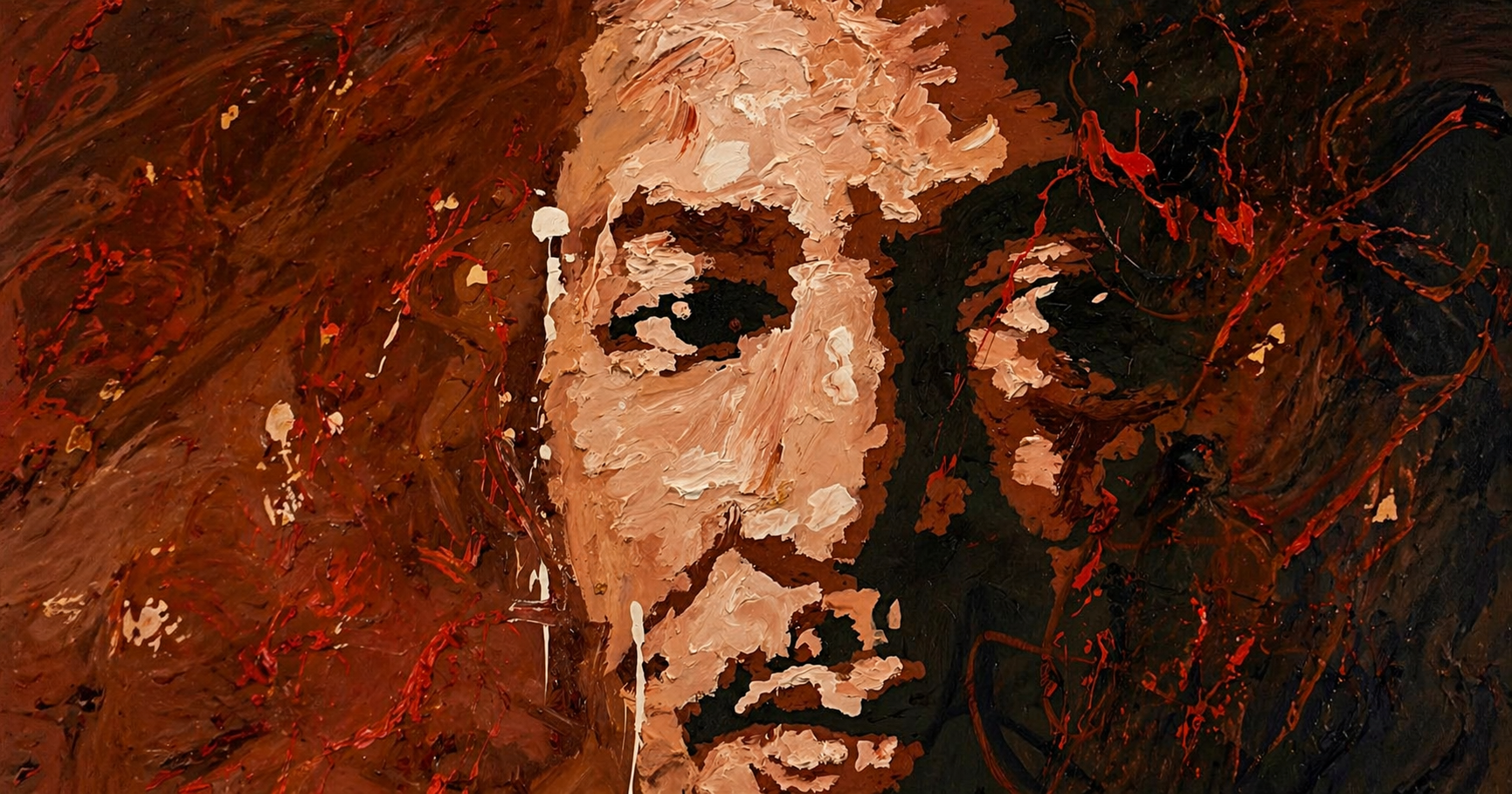
In “Presence that Echoes – MLK”, Ramaya Vallias does not simply portray Martin Luther King Jr. He reconstructs him in real time, before an audience that witnesses not only the birth of an image, but the materialisation of a symbol.
The painting carries warm, dense and earthy tones. Ochres, browns and blacks form an almost organic foundation, as though the canvas itself had become fertile soil for memory and struggle.
Red appears across the composition with electric force, evoking sacrifice, urgency and transformation. White, applied in sharp gestures, opens spaces of light, suggesting hope, transcendence and spiritual breath.
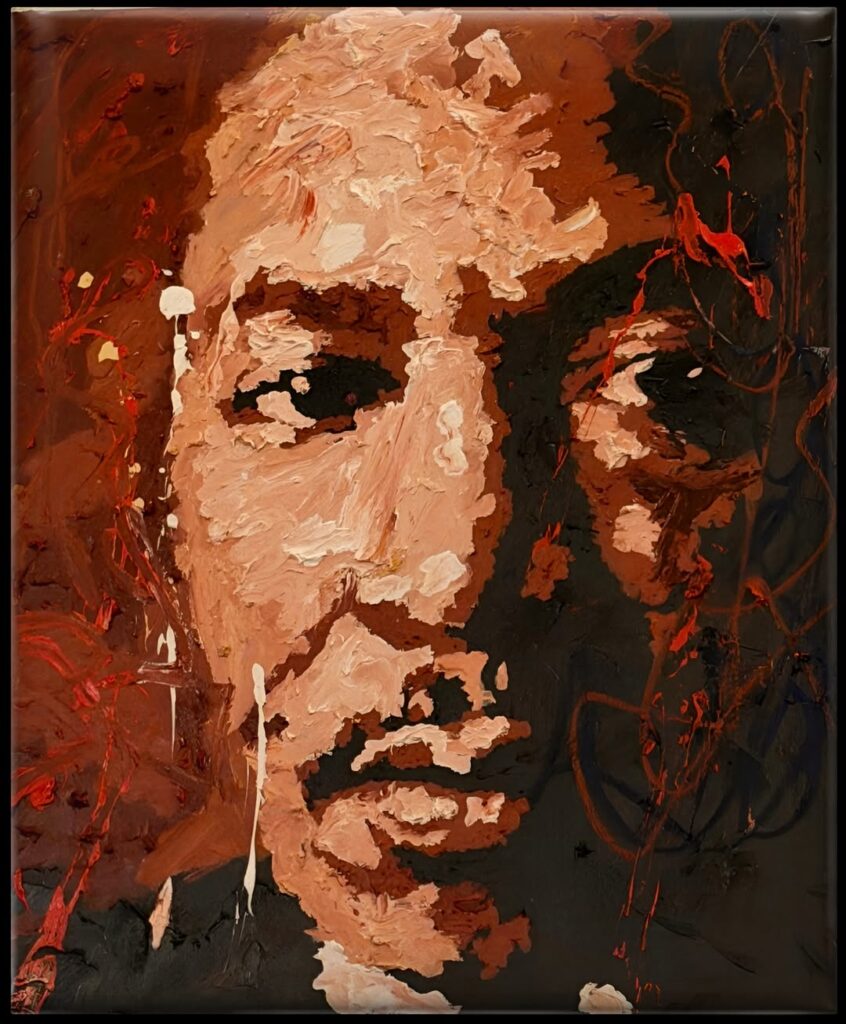
The face emerges through thick layers of paint. It is not merely represented. It appears, disappears and returns, suspended between presence and dissolution. This tension is central to Ramaya’s abstract realism, which does not seek only photographic resemblance, but the emotional truth that lives beyond form.
The result is a powerful portrait, almost ritualistic in atmosphere. Light and shadow do not only define the face. They suggest the dualities of Dr King’s legacy: pain and hope, silence and voice, suffering and moral courage.
A Humanitarian Civil Diplomat who paints presence and purpose
Born in Belo Horizonte, Brazil, in 1973, Ramaya Vallias developed a personal artistic language shaped by aesthetic sensitivity, technical research and an intense search for expression through painting.
For Ramaya, art is not something that comes only from outside. It awakens from within. His creative process reflects this conviction, transforming emotion into colour, memory into gesture and life into painting.
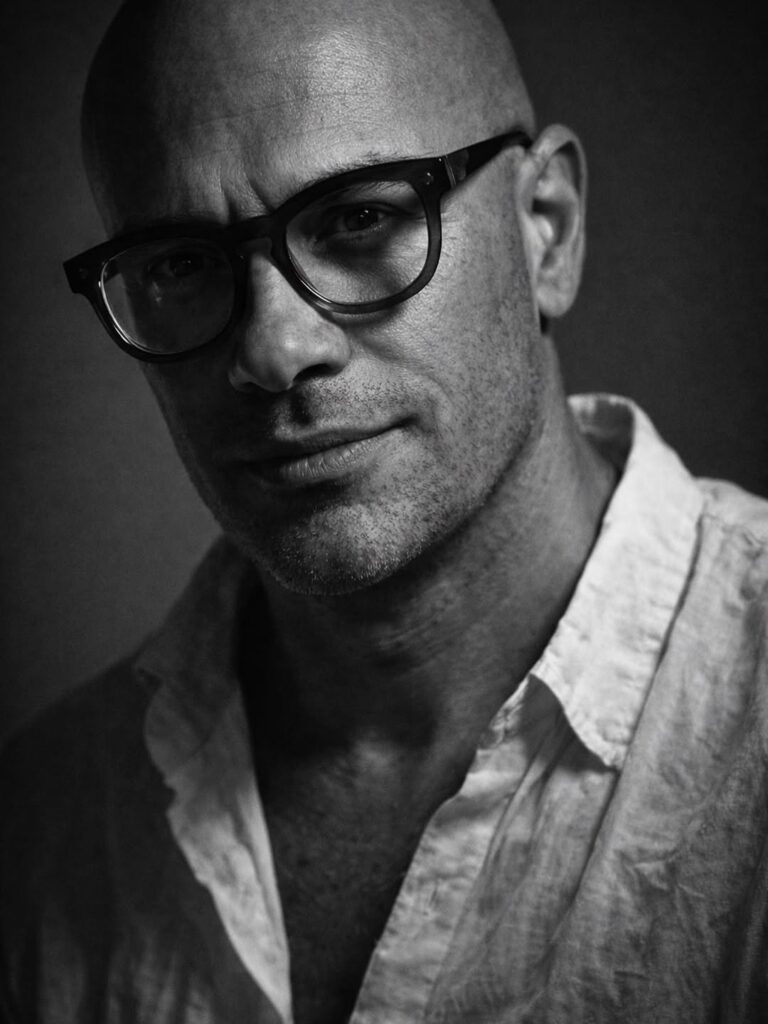
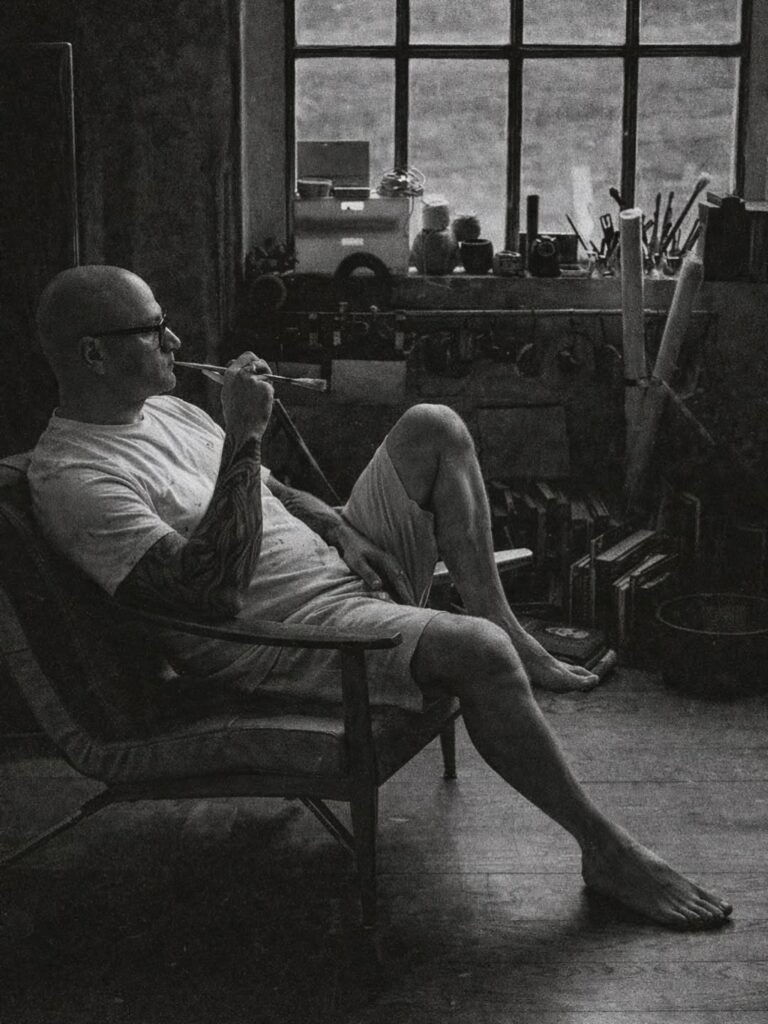
Inspired by the great masters of art, especially Vincent van Gogh, whom he regards as a guiding influence, Ramaya builds a constant dialogue between emotion and technique, between the visible and what pulses beneath the surface.
His background as a professional photographer for more than 25 years also gives structure to his painting. His understanding of composition, light, scene and visual rhythm strengthens the architecture of his portraits and deepens the emotional impact of his canvases.
Abstract realism in dialogue with humanitarian values
Ramaya Vallias’s artistic production moves between figuration and abstract realism. His portraits explore the frontier between the concrete and the subjective, where the human face still breathes, but the image also carries memory, tension and inner movement.
His work is also informed by his study of Renaissance painting, major historical cycles of art and the reverberations of classical visual language in contemporary expression.
This artistic path gives particular strength to his tribute to Dr King. By painting the civil rights leader during a solemn ceremony dedicated to Humanitarian Civil Diplomacy, Ramaya Vallias united artistic creation with public remembrance.
In the context of Jethro International, the image of Dr Martin Luther King Jr was not treated only as a historical reference. It became a moral presence, a voice still speaking to the conscience of nations, institutions and citizens.
The live performance reminded those present that humanitarian action is also made of symbols, beauty and memory.
Art as a universal language of dialogue
According to the artist’s own reflection on the performance, painting live at the Cidadela de Cascais was more than an artistic presence. It was a gesture of connection between cultures, values and purposes that cross borders.
Before civil, diplomatic and humanitarian leaders, Ramaya transformed art into a universal language of dialogue and presence.
This idea lies at the heart of the ceremony. Humanitarian Civil Diplomacy recognises that dignity can be defended not only through speeches, institutions and public action, but also through artistic gestures that awaken conscience and emotion.
In Cascais, Ramaya’s brush became a voice. His colours became testimony. His canvas became a bridge.
The Martin Luther King Prize and the language of art
Ramaya Vallias was also laureated with the Martin Luther King Prize of Jethro International, one of the organisation’s most significant humanitarian distinctions.
The recognition celebrated not only his artistic trajectory, but also the way his work can elevate human dignity through visual expression.
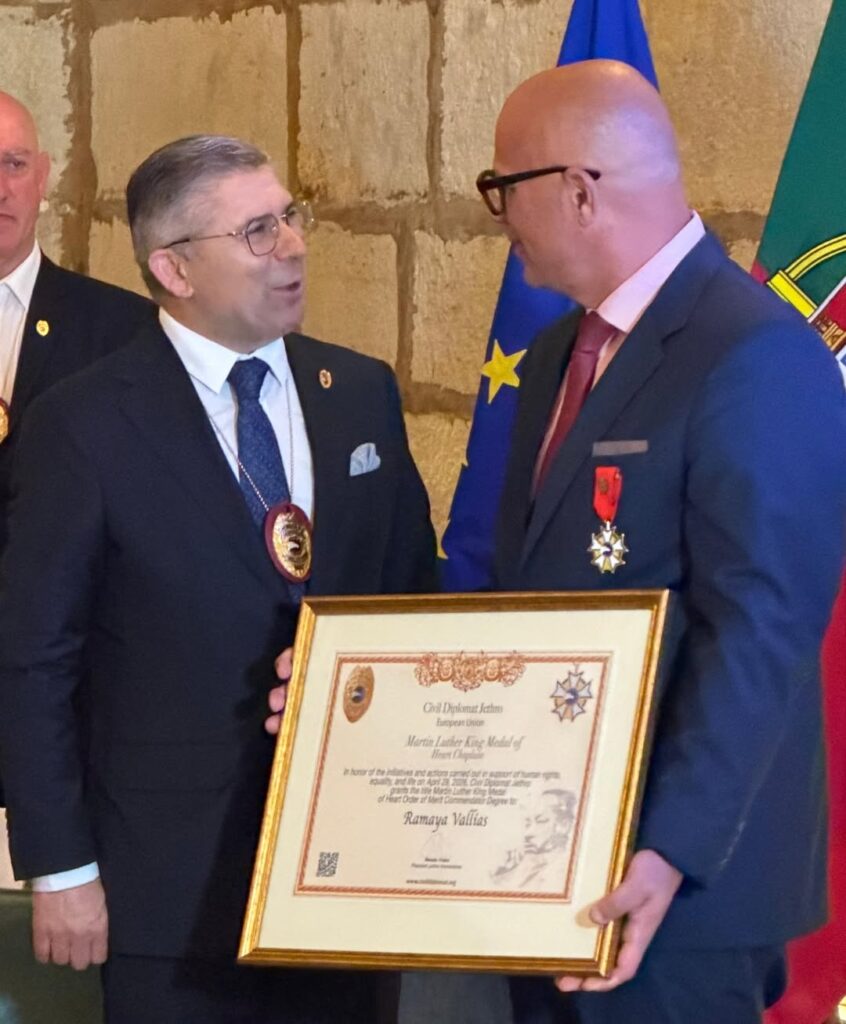
The artist has exhibited not only in Brazil, but also internationally, including in Portugal, France, Spain and the United States. His expanding presence in the international art scene reinforces the reach of his abstract realism and the cultural relevance of his work.
His tribute in Cascais showed that art can become a diplomatic language, able to communicate where speeches sometimes cannot reach.
Through his painting, Ramaya Vallias honoured Dr King, touched the hearts of the guests and reinforced the mission of Civil Diplomat Jethro International: to recognise citizens who act with purpose, conscience and commitment to human values.
A contemporary artwork with memory and technology
Another distinctive feature of Ramaya Vallias’s work is the integration of NFC technology into his paintings.
Each artwork incorporates, in a discreet and integrated way, a digital NFC tag that gathers technical and conceptual information about the piece. Through this digital seal, collectors can access the artwork’s catalogue details, curatorial text, high-resolution image, descriptive memorial, biographical context of the portrayed figure and the artist’s creative motivation.
This connection between material painting and digital documentation gives his work a contemporary dimension. It also preserves the narrative memory of each creation, ensuring that the story behind the canvas remains accessible beyond the moment of its exhibition.
In the case of “Presence that Echoes – MLK”, this detail becomes especially meaningful. The work does not only preserve the image of Dr King. It also preserves the emotional and ceremonial context in which the tribute was born.
A moment that remained in the memory of the ceremony
The Cidadela de Cascais offered a dignified and historic setting for this artistic homage.
Amid the solemn atmosphere of the event, the live painting became one of its most unforgettable moments. The audience witnessed not only the creation of a portrait, but the birth of a symbol.
Ramaya Vallias’s tribute reminded everyone present that the legacy of Dr Martin Luther King Jr continues to move people across continents, generations and cultures.
In Cascais, that legacy was not only spoken. It was painted.
And through colour, gesture and emotion, Humanitarian Civil Diplomacy found another way to be seen, felt and remembered.

No comment yet, add your voice below!